 Cardiff Media
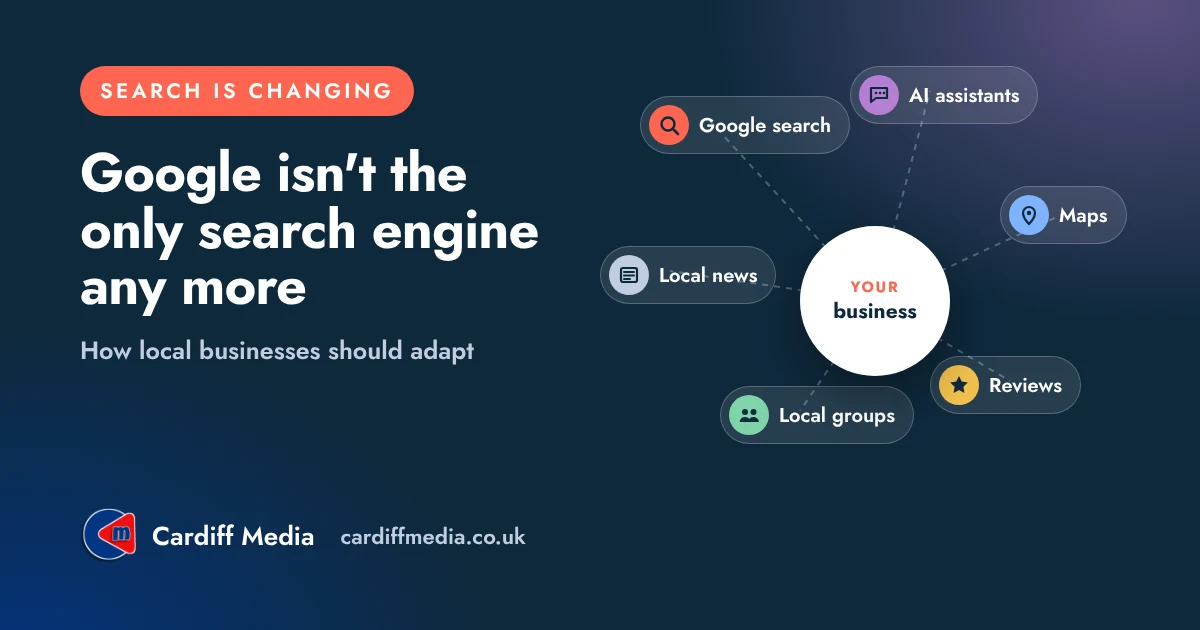
Google is still the biggest place your customers search, and it isn't going anywhere. But it's no longer the only place. More and more people now ask ChatGPT, Copilot, Gemini or Apple's assistant who to call, or ask in a local Facebook group, before they ever type anything into Google. For a small business, that doesn't mean SEO is over. It means the job has got wider.
I've been doing SEO for businesses in Cardiff and South Wales since 2010, and this is the biggest change I've seen in how people find a local business. Here's what has actually changed, what hasn't, and the five things I'd do about it.
What's actually changed?
For twenty years, getting found meant one thing: ranking on Google. Every update changed the rules, but Google was always the referee. Now there are several referees.
- AI assistants answer the question directly. Someone asks "who does skip hire near Newport?" and gets a short list of names, without visiting ten websites first. BrightLocal's 2026 survey found use of ChatGPT and other AI tools for local recommendations jumped from 6% to 45% in a year (BrightLocal).
- Google itself answers more questions on the page. AI Overviews sit above the normal results, so fewer people click through to any website.
- The answer comes from more places. AI tools build their recommendations from your website, but also from review sites, directories, social media, local news and forums. What other people say about you now carries as much weight as what you say about yourself.
What hasn't changed?
This is the part that gets lost in the "SEO is dead" headlines. Google is still where most local customers find a business, and its map results still drive more calls than anything else for most trades. And the AI tools don't invent their answers: they lean heavily on the same signals good SEO has always built.
Google's own guidance on its AI features says the normal SEO best practices still apply, there's no special markup you need, and "AEO hacks" are something to avoid (Google Search Central). In other words, a fast, clear website, a complete Google Business Profile and genuine reviews still do the heavy lifting. They just aren't the whole job any more.
Five things a local business should do now
1. Keep the Google basics rock solid
Don't neglect Google while chasing the new tools. Keep your Google Business Profile complete and active, keep your website fast and clear about what you do and where, and keep your details identical everywhere. Every AI tool that checks your business will find these first. If you're not sure where you stand, our post on where to start with SEO covers five free jobs to do this week.
2. Publish things only you can say
AI tools have read every generic "top 10 tips" article on the internet. They have no reason to quote another one. What they can't find anywhere else is your own experience: your real prices, the jobs you've done in specific areas, the problems you see every week, and your own results.
So put that on your website. A short case study with before and after photos, a page explaining what really affects the price of a job, or the five questions customers ask you most, answered properly. That kind of first-hand detail is what gets a business quoted, and it's what convinces a customer reading it too.
3. Get mentioned in the places AI tools look
If the only website that talks about your business is your own, AI tools have little reason to trust it. Look for genuine mentions elsewhere:
- local news sites and business publications in Wales
- your trade association and any supplier or manufacturer directories
- client case studies, where a happy customer is willing to be named
- a few good local directories, kept up to date
A handful of relevant, real mentions is worth far more than a long list of low-quality links.
4. Look after your reputation everywhere, not just on Google
AI tools read reviews and public conversations as well as listings. That includes Google reviews, Facebook recommendations, Trustpilot or trade review sites, and local community groups. Keep asking every genuine customer for a review, reply to all of them, and when someone asks for a recommendation in a local Facebook group, be the business that turns up with a helpful answer rather than a sales pitch.
And don't forget Bing. Microsoft Copilot runs on it, and ChatGPT's search draws on it among other sources. Claim your Bing Places listing and add your site to Bing Webmaster Tools. It takes ten minutes and very few small businesses bother.
5. Measure enquiries, not just rankings
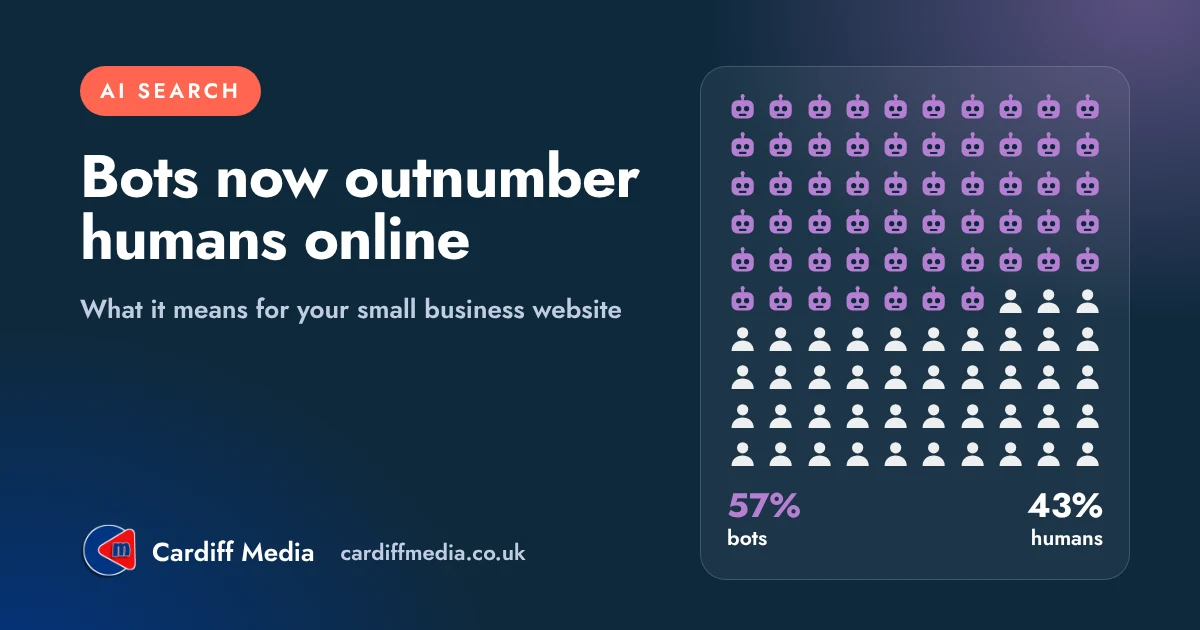
As more of the journey happens inside AI tools and on Google's own results page, website visits and rankings tell you less than they used to. Bots now make up more than half of web page requests on Cloudflare's network, which makes visitor numbers even less reliable (more on that here).
Track what actually pays the bills: calls, form enquiries, bookings and quote requests. Ask every new customer how they found you, and add "ChatGPT or another AI tool" to the options. You may be surprised how often it comes up.
Is this just SEO with a new name?
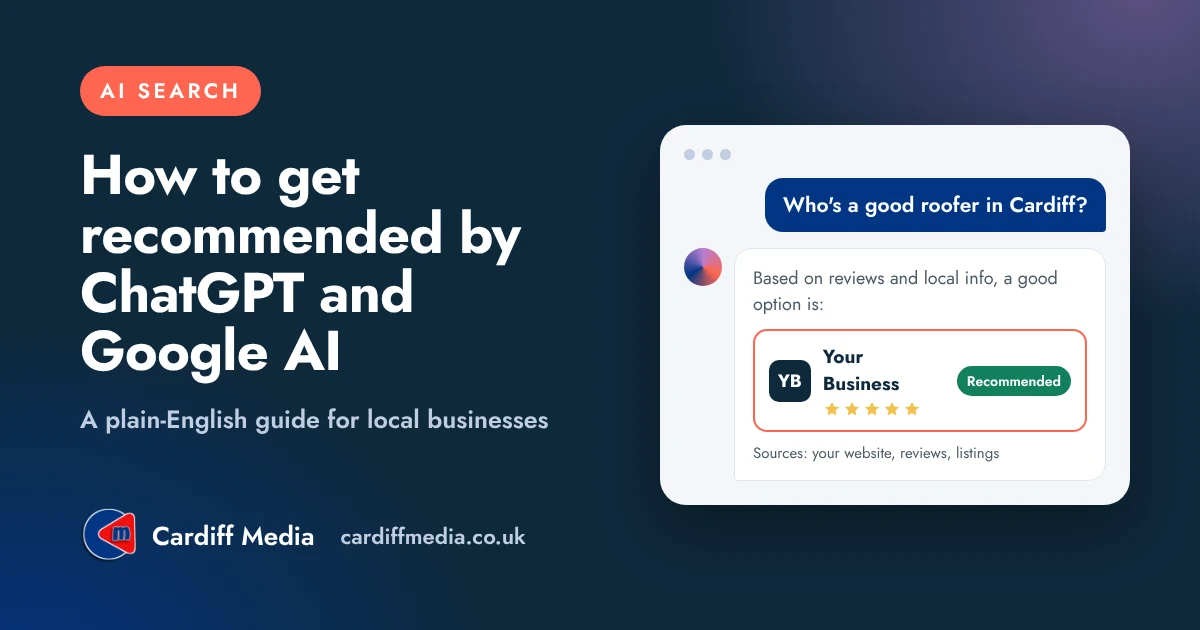
Partly, yes. You'll hear it called answer engine optimisation (AEO) or generative engine optimisation (GEO). The useful part is real: structure your pages so they answer questions clearly, and make sure the wider web backs up what you say about yourself. But anyone selling it as a completely separate service that replaces SEO, or promising a guaranteed spot in ChatGPT, is selling a story. Nobody controls what an AI tool says. What you can control is how clear, consistent and well supported your business is wherever it looks. Our guide to getting recommended by ChatGPT and Google AI goes into the detail.
What this means for you
If your Google presence is already in good shape, the next step is widening it: original content, real mentions, reviews across platforms and Bing. If it isn't in good shape yet, fix that first, because everything else is built on it.
That's how we approach every campaign at Cardiff Media: SEO in Cardiff that covers Google, the map results and AI search together, with prices published on the site. If you've got questions, our FAQ page answers the common ones, or you can book a free site review.
Common questions
Is SEO dead because of ChatGPT?
No. Google is still where most local customers search, and AI tools rely heavily on the same signals SEO builds: clear websites, consistent business details and genuine reviews. SEO hasn't died; it has widened to cover more places your customers ask.
Should I stop focusing on Google?
No. Keep your Google Business Profile and website in top shape first. Then widen your presence with original content, mentions on other trusted sites, reviews across platforms and a Bing Places listing.
How do I know if AI tools are sending me customers?
Ask every new customer how they found you and include AI tools as an option. You can also ask ChatGPT, Copilot and Gemini the questions your customers would ask, and see whether your business is named.