 Cardiff Media
If you run a small business, 2026 is the year search stopped being a list of ten blue links. Google now answers a lot of questions itself, AI tools like ChatGPT recommend local businesses, and your reviews matter more than ever. The good news? The things that win are the things a real business can do better than any template: show real experience, keep your details right, and make your website genuinely useful.
Here's what's actually changed this year, what hasn't, and what I'd do about it.
1. AI answers now sit above the normal results
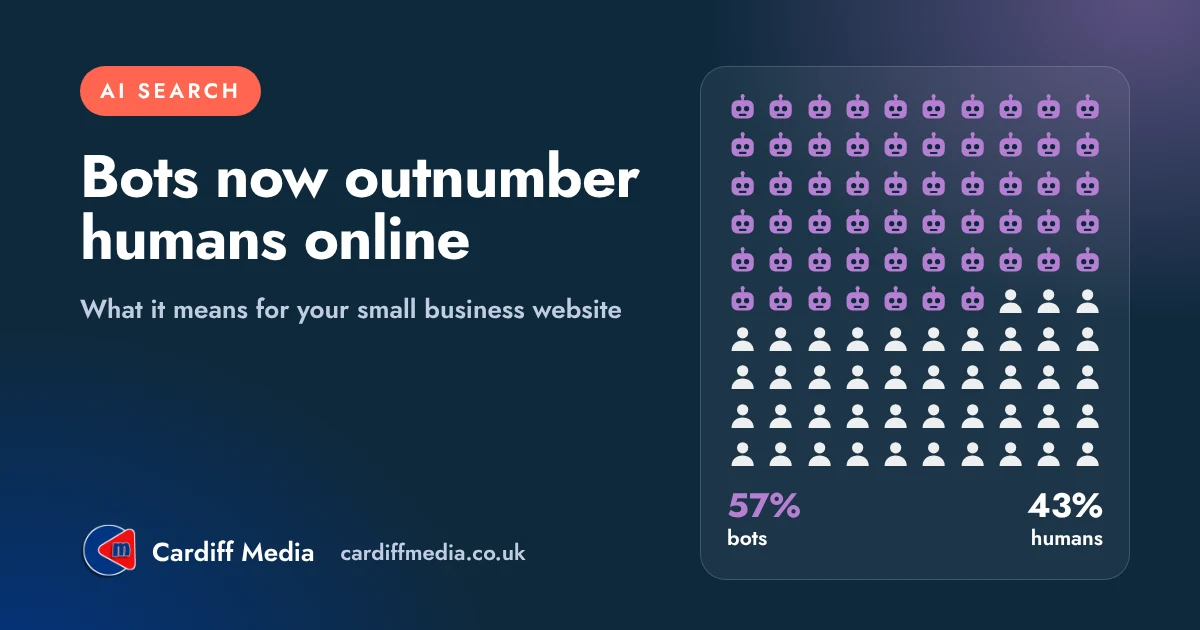
Google's AI Overviews and AI Mode summarise an answer before anyone scrolls to the websites. People click less as a result: one 2026 study found 68% of US Google searches ended without a click, up from about 60% in 2024, and AI Overviews now appear on more than 20% of searches (Search Engine Land).
That sounds bad, but the clicks that do come through are from people further along, closer to picking up the phone. The goal has shifted from "rank somewhere on page one" to "be the business Google and AI tools quote and recommend".
Google has also started giving site owners more visibility. In June 2026 it added generative AI insights to Search Console, so you can see which of your pages appear in AI responses, plus a control to opt out of AI Overviews and AI Mode if you choose (Google). For most local businesses, opting out would cost more than it saves.
2. There's no secret "AI SEO" trick
You'll hear a lot about AEO and GEO (answer engine and generative engine optimisation). The useful part is real: clear, direct answers that AI tools can quote. But Google's own guide to its AI features, updated in July 2026, is blunt about the rest. It says the best practices for SEO still apply, there's no special markup you need to add, and Google Search doesn't use llms.txt files. It also warns against "AEO/GEO hacks" like rewriting content just for AI or chasing fake mentions (Google Search Central).
In other words, good SEO is AI SEO. Anyone selling you a magic AI shortcut is selling you something Google has told them doesn't work.
3. Generic AI-written content is a liability
Google's guidance asks for original, "non-commodity" content with a first-hand or expert view. That's the opposite of the stock copy flooding small business websites this year: "hassle-free", "look no further", "we pride ourselves". If you could swap your business name for a competitor's and the page would still read the same, it gives Google and AI tools nothing to recommend you for.
What works instead: your prices, the areas you really cover, real jobs with real photos, the questions customers actually ask you, and the things only someone who's done the work would know.
4. Reviews now feed AI recommendations
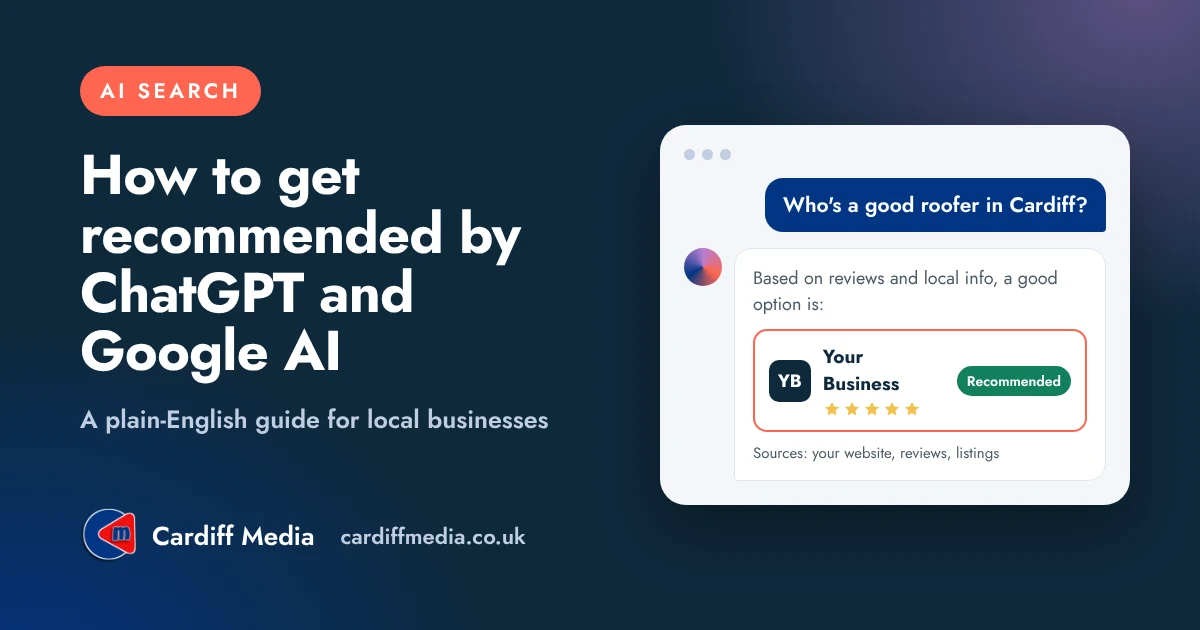
BrightLocal's 2026 survey found that use of ChatGPT and other AI tools for local recommendations jumped from 6% to 45% in a year. It also found 97% of consumers read reviews for local businesses, and 74% only care about reviews from the last three months (BrightLocal).
So a burst of reviews two years ago isn't enough. You need a steady flow of genuine, recent ones, and replies to all of them. Never buy or incentivise reviews: it breaks Google's rules and, in the UK, the Digital Markets, Competition and Consumers Act 2024.
5. Local SEO still comes down to three things
Google ranks local results on relevance, distance and prominence (Google Business Profile Help). You can't move closer to a customer, but you can control the other two:
- Relevance: the right Business Profile categories, a services list, and website pages for each service and each area you genuinely cover.
- Prominence: reviews, local links and mentions, and consistent business details everywhere.
Google's AI guide also tells businesses to keep their Business Profile details current, because AI features draw on them too.
6. The technical basics matter more, not less
AI features are built on Google's normal search systems, so a page has to be indexed and crawlable before it can be quoted anywhere. That means a fast, mobile-friendly site, no duplicate pages, clean titles and descriptions, and Search Console set up. A slow, bloated site is still a slow, bloated site, however clever the content.
7. Measure calls, not just rankings
With fewer clicks overall, rankings and traffic tell only part of the story. Track the things that pay the bills: calls, bookings and enquiries, alongside Search Console's new AI report. Be wary of tools or agencies quoting huge visitor numbers. Ask how many came from your area, and how many turned into work.
What to do this quarter
- Check your Google Business Profile: categories, services, hours, photos, and that you're the owner.
- Ask every customer from the last three months for a review, and reply to every one.
- Replace any generic copy on your main service pages with your own facts: prices, areas, real jobs.
- Add a short FAQ to each service page answering what customers actually ask.
- Set up Search Console and look at the new generative AI report.
Common questions
Do I need special markup or an llms.txt file for AI search?
Not for Google. Its July 2026 guidance says no special markup is needed for its AI features and that Google Search doesn't use llms.txt. Normal structured data is still worth having for rich results.
Is SEO still worth it with AI answering questions?
Yes. AI features are built on Google's search systems and quote the websites they trust. Local businesses still win most of their work from people who search, compare and then call.
Should I opt my website out of AI Overviews?
For most local businesses, no. Google says sites that opt out won't get traffic or impressions from those features, and being quoted there is often how new customers first hear of you.
Sources and further reading
- Google Search Central: Optimizing your website for generative AI features (updated July 2026)
- Google: New opportunities, control and insights for website owners (June 2026)
- Search Engine Land: Google zero-click searches 2026 study
- BrightLocal: Local Consumer Review Survey 2026
- Google Business Profile Help: Tips to improve your local ranking
Want to know where your business stands? Book a free site review and I'll go through your rankings, your Business Profile and how AI tools describe you. Or read how our SEO agency in Cardiff works, and browse more answers in our FAQs.